Weekly forecast: the US dollar and the three questions that decide the week
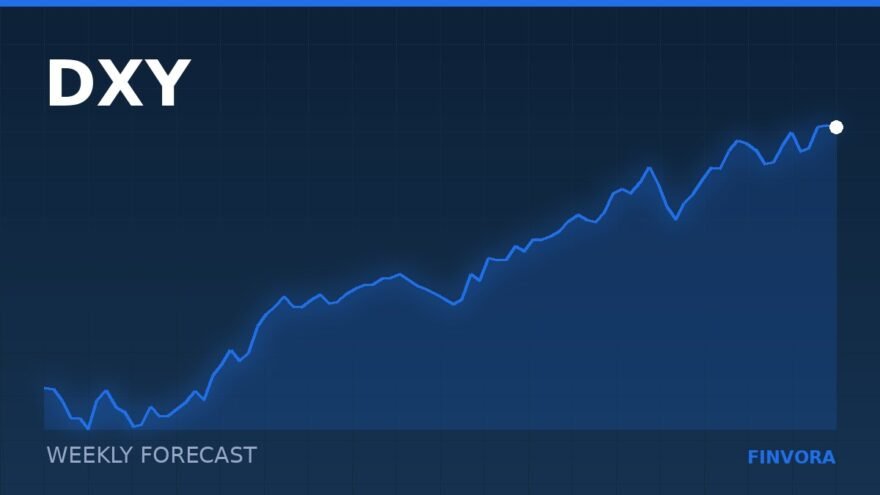
A scenario framework for the dollar index rather than a single prediction: what has to happen for each path, and the level that invalidates it.
Key takeaways
- – Scenario analysis beats point forecasts because it defines what would prove you wrong
- – The dollar’s path this week hinges on front-end rate repricing, risk appetite and positioning
- – Each scenario below carries an explicit invalidation level to be marked on your own chart
A forecast that says only “the dollar will rise” is untestable and therefore useless. What follows is a scenario framework: three plausible paths, the condition that produces each, and the market behaviour that would tell you the path is wrong. Mark the levels on your own chart from live pricing — do not trade off any level quoted in a piece of commentary without verifying it first.
Scenario one: rate-supported dollar strength
What produces it: data that pushes US front-end yields higher relative to European and Japanese equivalents, particularly firmer inflation or a resilient labour market.
What it looks like: the dollar index grinding higher with equities broadly stable, EUR/USD leaking lower without panic, and USD/JPY firm. This is the orderly version of dollar strength.
Invalidation: yields rising while the dollar fails to follow. That divergence usually means the move is already positioned for.
Scenario two: risk-off dollar strength
What produces it: an equity drawdown, a credit event or a geopolitical escalation that triggers deleveraging.
What it looks like: the dollar rising against everything except the yen and the Swiss franc, commodity currencies underperforming heavily, and volatility rising across asset classes. This version moves faster and reverses faster.
Invalidation: volatility falling back while the dollar holds its gains — the move has become a rates story instead, and should be traded differently.
Scenario three: dollar softness on easing expectations
What produces it: softer US data that moves front-end expectations toward earlier or deeper easing, without triggering genuine growth fear.
What it looks like: equities rallying, gold firm, the dollar falling broadly, and the highest-beta currencies leading. This is the most comfortable environment for carry.
Invalidation: equities failing to rally on soft data. When bad news stops being good news, the market has switched from pricing easing to pricing recession, and dollar weakness typically reverses.
Positioning is the wildcard
Where speculative positioning is already stretched in one direction, the response to news becomes asymmetric — muted in the direction of the crowd, exaggerated against it. Before assuming a data surprise will move the dollar proportionally, ask who is left to buy or sell.
How to use this
Write down which scenario you think is most likely, and the level at which you would accept you were wrong, before the week starts. The purpose of a forecast is not to be right; it is to make the moment of being wrong obvious enough that you act on it.