S&P 500 and the dollar: what the equity tape tells currency traders
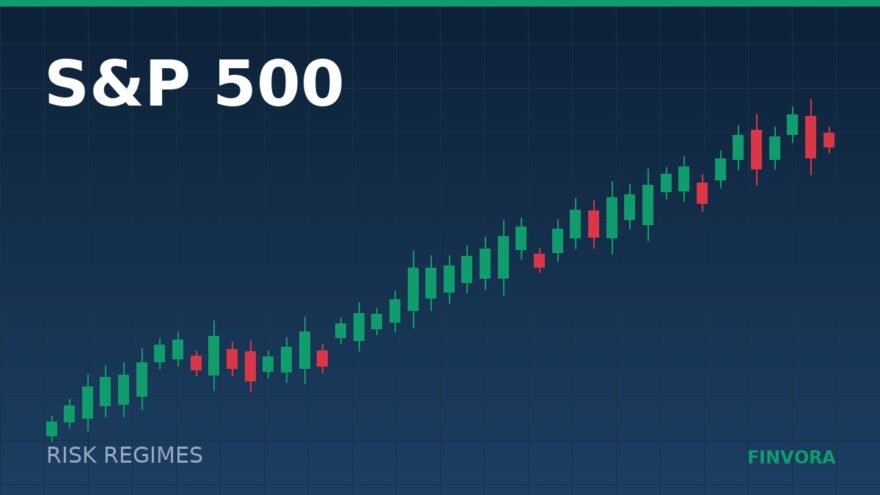
The equity index is not a currency driver, but it is an excellent real-time indicator of which regime the FX market is trading in.
Key takeaways
- – Equity direction identifies the risk regime, which determines how FX pairs will respond to news
- – Breadth and volatility matter more than the index level for regime identification
- – The correlation between stocks and the dollar is unstable and must be re-checked, not assumed
Currency traders who ignore equities are missing a free, continuously updated read on market psychology. The relationship is not causal in a simple sense — a rising stock index does not make the euro go up — but equity behaviour identifies which regime the market is in, and regime determines how everything else responds.
Risk-on and risk-off, defined usefully
The terms are overused to the point of meaninglessness. A more precise framing: in a risk-seeking regime, capital moves toward higher-yielding and higher-beta assets, funding currencies weaken, and carry trades work. In a risk-averse regime, capital moves toward the deepest and most liquid assets, funding currencies strengthen sharply, and correlations across everything else converge toward one.
Equity indices, and particularly volatility measures, tell you which of those is operating right now.
Breadth is the better signal
An index can rise while most of its constituents fall, if the largest weights are doing the work. That is a narrower, more fragile advance than a broad one, and it tends to precede regime instability. Advance-decline measures and equal-weighted versions of the index give a cleaner read on whether risk appetite is genuinely broad.
The correlation is not fixed
There have been extended periods when the dollar fell as stocks rose, consistent with the classic risk-on template. There have also been long stretches when both rose together, because the driver was US growth outperformance attracting capital into both. Assuming yesterday’s correlation still holds is one of the more expensive habits in macro trading. Check it on a rolling basis rather than treating it as a rule.
Where equities genuinely lead FX
Two situations stand out. The first is a volatility spike: when equity volatility rises sharply, deleveraging follows, and funding currencies rally before the reason becomes clear in the news. The second is a sustained relative performance shift between regions — when one region’s equity market persistently outperforms another’s, capital flow tends to follow and the currency pair between them typically drifts in the same direction over months.
Practical application
Keep an index chart and a volatility measure visible while trading FX. Before entering, ask which regime is active and whether your trade makes sense inside it. A short-yen carry position taken while equity volatility is rising is not a bad trade because the analysis is wrong — it is a bad trade because the regime is against it.