Gold: the three inputs that actually explain XAU/USD, and the one that does not
Real yields, official-sector buying and the dollar do most of the work in gold. Inflation headlines, despite the folklore, do surprisingly little on their own.
Key takeaways
- – Real yields, not headline inflation, are the dominant discount-rate input for gold
- – Central bank reserve buying is price-insensitive demand and changes the shape of drawdowns
- – The dollar matters, but as an amplifier rather than a cause
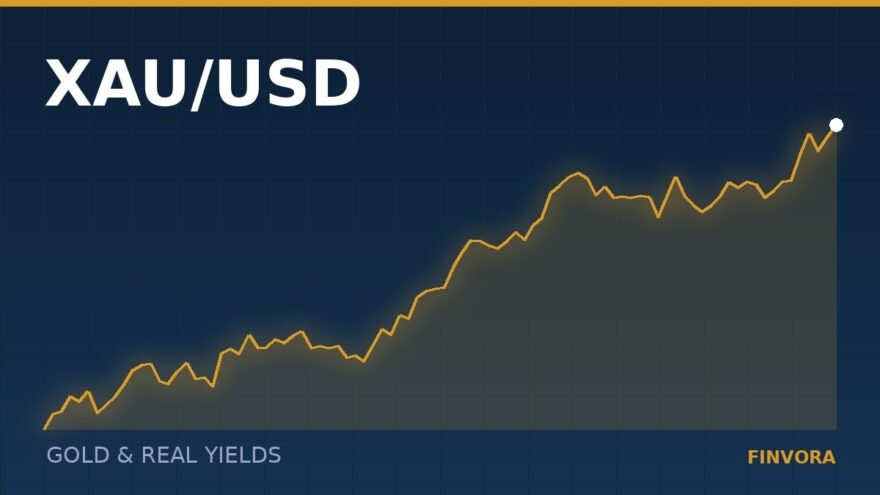
Gold is often described as an inflation hedge, and that description has cost a lot of traders a lot of money. Gold pays no coupon, so what it competes against is the real return available on a risk-free asset. When inflation-adjusted yields fall, the opportunity cost of holding a non-yielding asset falls with them and gold becomes easier to own. When real yields rise, that logic runs in reverse — which is why gold can fall during periods of high inflation if nominal rates are rising faster.
1. Real yields set the discount rate
The cleanest proxy is the inflation-protected government bond yield at the ten-year point. Watch its direction rather than its level. A sustained move lower in real yields is the most reliable macro tailwind gold gets, and it usually shows up in the metal before it shows up in commentary. A sustained move higher is the headwind that ends rallies, regardless of what the inflation prints are doing.
2. Official-sector demand changes the shape of selloffs
Central banks and sovereign funds do not trade gold the way a hedge fund does. They accumulate reserves on multi-year mandates and are largely indifferent to a fifty-dollar move. That price-insensitive bid does not create bull markets on its own, but it does something structurally important: it makes drawdowns shallower and shorter than they would otherwise be, because a large, patient buyer absorbs supply into weakness. When you see gold refuse to break a level that “should” have gone, this is often why.
3. The dollar amplifies, it does not originate
Gold is priced in dollars, so a stronger dollar mechanically makes it more expensive for non-dollar buyers and tends to weigh on the price. But the relationship is unstable. There have been long stretches where both rallied together, usually when the driver was risk aversion rather than rates. Treat the dollar as a modifier on the real-yield signal, not as a substitute for it.
The input that does less than you think
Headline consumer price prints move gold intraday, sometimes sharply, but the direction depends almost entirely on what the print does to rate expectations. A hot inflation figure that pushes real yields up is bearish for gold, not bullish. Traders who buy the metal reflexively on an inflation surprise are trading a story rather than a mechanism.
Structuring the chart work
Because gold trends in long, clean legs and then consolidates for months, timeframe discipline matters more here than in most FX pairs. Mark the weekly range and the prior consolidation midpoints. Inside an established uptrend, pullbacks into the top of a prior multi-week base have historically offered better risk-reward than chasing breakouts, because the breakout candles in gold are frequently the widest of the move and the worst entries.
Risk notes specific to the metal
Gold’s overnight gaps around geopolitical headlines are larger than most traders size for, and the spread on retail platforms widens meaningfully in the thin hour after the New York close. If you carry a position through that window, your stop is not where you think it is.
For live cross-market context, see the rates and charts hub.